Between Platform and Desk: A Suede Protocol for the Urban Journey
Public transport is a stern test of any wardrobe. A suede boot, bag or jacket may leave the house looking composed, but the Tube at eight in the morning, a damp bus seat and the walk between station and office have their own ideas. The aim is not to wrap suede in cotton wool. It is to understand where the risks lie, manage them with a little forethought and recognise the point at which a professional hand is wiser than a pocket-sized brush.
The morning calculation
The British commute is rarely one mode of transport. It is a walk to the station, a crowded carriage, a change at a major interchange and perhaps a bus for the final stretch. Suede responds to that sequence in predictable ways: moisture darkens the nap, friction flattens it, and contact with grubby surfaces transfers oils that are far harder to lift than dry dust.
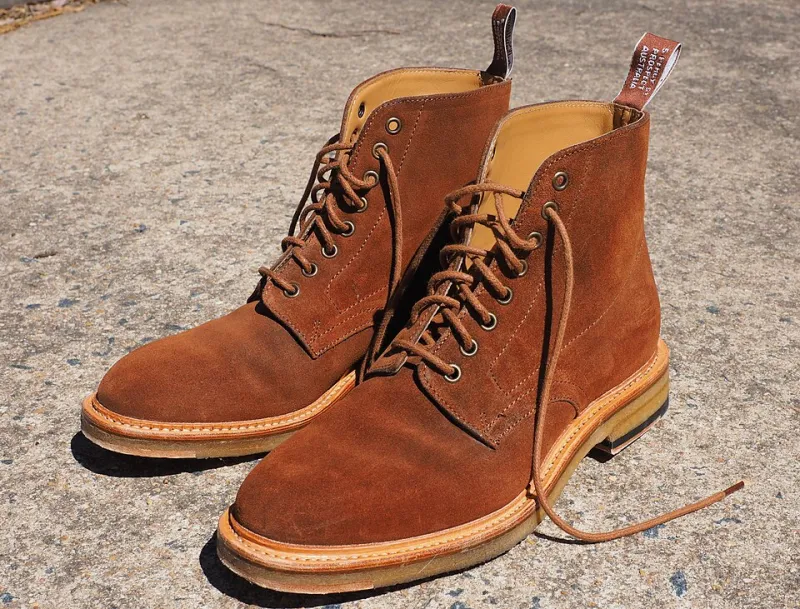
Before leaving, consider the day’s route rather than the outfit alone. If rain is likely, a suede boot is still possible, but it should be protected and paired with a route that avoids the longest exposed walk. If the forecast is merely grey, the greater hazard may be the crush of a peak-hour carriage and the abrasive edge of a seat. A suede jacket worn over a smooth shoulder bag will fare better than one rubbed all morning by a canvas strap.
Protection before the first step
Prevention begins at home, not on the platform. A suede protector spray, applied in a ventilated room and allowed to dry fully, gives the nap a useful degree of resistance. It will not make suede waterproof, and it should never be treated as permission to stride through puddles, but it buys time when a fine drizzle begins or a fellow passenger’s umbrella sheds water against a trouser leg.
Brush the nap before leaving. A few passes with a soft suede brush lift dust and settle the surface into a uniform direction. This small ritual also reveals marks that developed since the last wear, giving one the chance to deal with them in calm conditions rather than under the fluorescent light of an office washroom.
For bags and jackets, consider the contact points. A shoulder strap that has been rubbing against a suede coat all week will create a shine mark long before the coat needs a clean. Rotating bags, or choosing a smooth leather strap for particularly crowded days, is a quiet form of care.
On the move: carriage, seat and crowd
The Tube is a study in unwanted contact. Seats may look clean, but moquette and metal edges are unforgiving against a suede skirt or jacket. Where possible, sit with the suede away from the seat back and avoid resting a suede bag on the floor. The floor of a carriage carries grit, spilled liquid and the residue of thousands of shoes. A bag placed there once may survive; placed there daily, it will not.
On a bus, the seat fabric is softer but no less capable of transferring fibres and grime. A suede coat is best kept on the lap if the bus is warm, or unbuttoned and allowed to fall clear of the seat. A suede boot should be kept away from the heating vents, which can dry the leather unevenly and stiffen the nap.
Crowded trains present the greatest risk of scuffing. The answer is not to become rigid with anxiety, but to position the suede items sensibly. A suede tote can be held in front of the body rather than swung at hip height. A suede jacket can be carried over an arm during the tightest part of the journey. If a scuff occurs, resist the urge to rub it with a fingertip; this only works the mark deeper into the nap.
Weather and the walk between
A light shower is manageable; a sustained downpour is not. If suede becomes damp, allow it to dry naturally, away from radiators and direct heat. Stuff boots with acid-free tissue or plain newspaper to hold their shape, and leave them in a well-ventilated room. Never use a hairdryer. Once dry, brush the nap gently to restore its direction.
Grit is a particular concern in colder months. The salt and grit used on pavements can leave pale tide marks on suede, especially at the heel and toe. These should not be tackled with a wet cloth, which risks spreading the salts further into the leather. A soft brush once the suede is dry will remove loose residue; anything more stubborn is best assessed by a salon.
Damage control in the moment
A small kit in a desk drawer or handbag is a reasonable precaution: a suede eraser, a soft brush and a clean microfibre cloth. A dry scuff often lifts with a gentle circular motion from the eraser, followed by a brush in one direction. A shine mark on a seat or elbow area can sometimes be eased by light brushing, but it should not be overworked.
What one should not do is apply water, soap or a general-purpose leather cleaner to suede in a public setting. These products can alter the colour and texture, and a hurried repair in poor light often creates a larger problem. If a mark is oily, dark or spreading, blot it lightly and leave it alone until it can be properly assessed.
When the salon is the sensible stop
Not every mark belongs to the commute. A deep scuff that has taken the surface with it, a shine mark that persists after brushing, a water stain that has dried into a ring, or a patch where the nap has flattened completely are all signs that the item has moved beyond routine care. Similarly, a bag strap that has transferred dye onto a suede jacket, or a boot that has been soaked through and dried stiff, will benefit from professional attention.
At Suede Salon, we treat the commute as part of the garment’s life, not a failure of care. A salon visit can restore the nap, correct uneven colour and address the kind of compressed shine that home tools cannot safely resolve. The earlier such items are seen, the more modest the intervention tends to be.
The evening reset
A few minutes at the end of the day make the next journey easier. Brush boots before they are put away. Empty a suede bag of loose items and wipe the base with a dry cloth. Hang a suede jacket on a broad hanger, away from direct heat, and allow it to breathe. If the day was wet, let everything dry slowly before brushing.
The commute will always leave its mark on suede, in the most literal sense. The pleasure lies in managing that mark with composure: protecting before leaving, behaving sensibly in transit and knowing when to place the item in professional hands. Suede is not fragile, but it is responsive. Treat it with a little foresight, and it will continue to look considered long after the rush hour has passed.