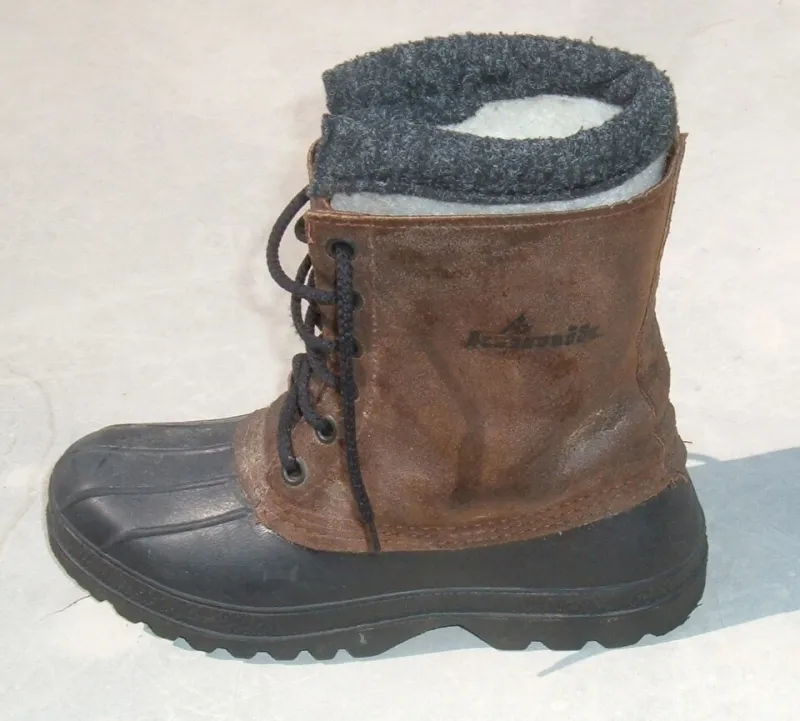
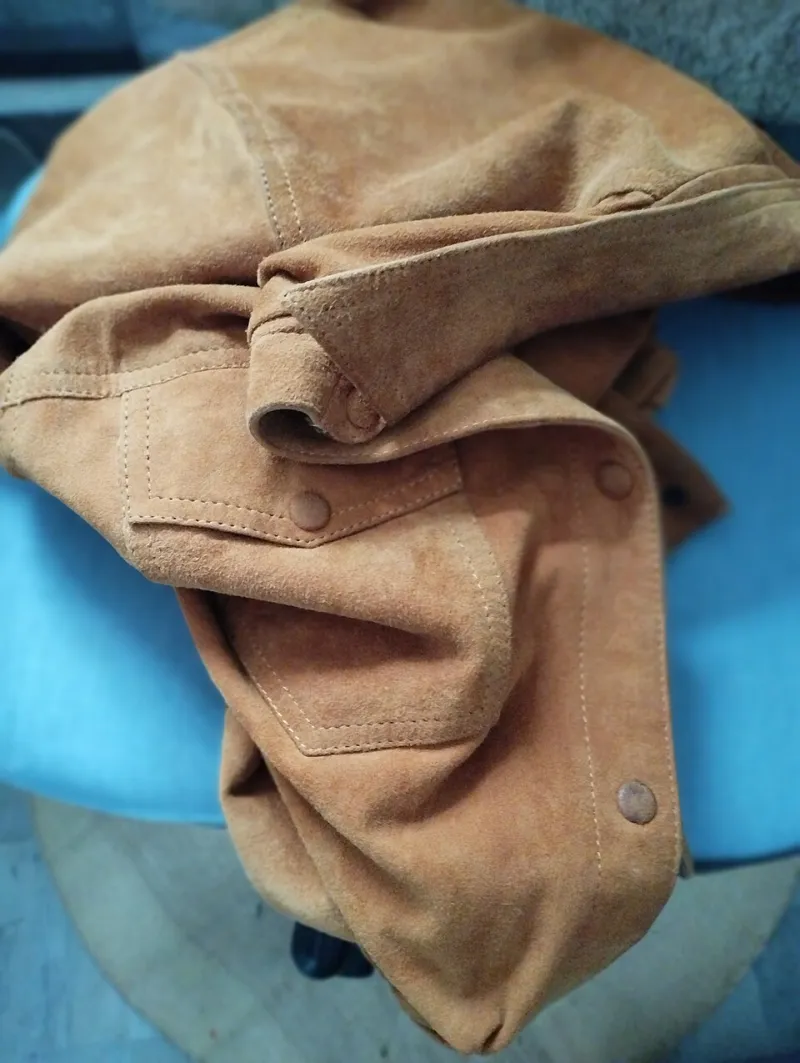
When the Gritters Have Been: A Restrained Winter Rescue for Suede
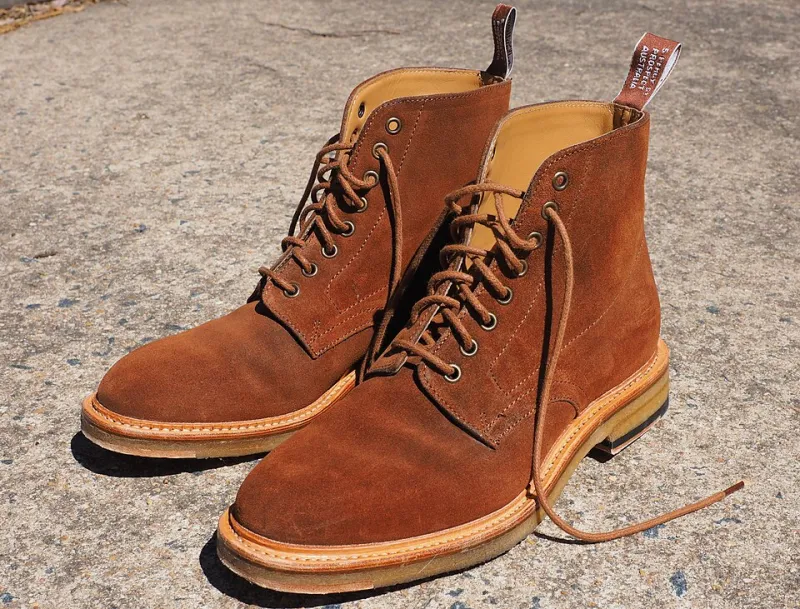
Photo: Nick-D, CC BY-SA 4.0, via Wikimedia Commons
British winter does not arrive politely. It comes as a slick of slush at the kerb, a crust of grit on the station steps and a fine white bloom along the welt of a suede boot. Road salt is not ordinary dirt. It is hygroscopic, abrasive and persistent, and it begins to alter the surface of suede as soon as it is walked indoors. The following protocol is deliberately cautious. It covers shoes, bags and jackets, and it separates what can be done safely at home from what should be left to Suede Salon.
Hour 0-2: Remove, Blot, Isolate
The first action is restraint. As soon as a suede piece comes indoors, remove it from the body or the foot and keep it away from direct heat. Do not rub the surface. Do not reach for a damp cloth. Do not apply vinegar, soap, detergent or a household stain remover, however familiar the remedy may sound. Salt is mobile when wet, and a well-meant intervention can drive it deeper into the nap or create a tide line around the original mark.
For boots and shoes, remove any loose slush from the sole edge with a dry cloth, then stuff the toe and heel with unprinted tissue or plain paper. This holds the shape while the suede dries and prevents the upper from creasing as it stiffens. For bags, empty the contents and fill the body loosely with tissue. For jackets, hang on a broad, shaped hanger in a room with still, ordinary air. Blot any standing moisture with a lint-free cloth, but do not press hard.
Hour 2-12: The Dry-Room Rest
Suede should dry at room temperature, away from radiators, wood-burning stoves, hairdryers and direct sunlight. Heat draws moisture out too quickly and can leave the leather hard, the nap flattened and the colour uneven. A dry-room rest is not passive neglect; it is the first stage of stabilisation. Change the tissue after four to six hours if it feels damp, and keep the piece isolated from other suede items so that salt and moisture are not transferred.
Do not brush damp suede. The nap is vulnerable when wet, and brushing at this stage can stretch the surface or push salt further into the fibres. If the piece is heavily saturated, skip the later dry-brushing step and record the time of exposure for the salon. A photograph taken in neutral daylight is useful evidence of the starting condition.
Hour 12-24: Dry Brushing and First Inspection
Once the suede is dry to the touch, a soft suede brush may be used in one direction to lift the nap and remove loose salt bloom. Work lightly and stop if the surface feels stiff or tacky. White residue is not always dirt; it may be salt drawn to the surface, and aggressive scrubbing will only spread it. A suede eraser may be used on fully dry, minor scuffs, but it is not a treatment for salt contamination.
If a mark remains after dry brushing, do not move on to liquid remedies. At this point the piece should be assessed by Suede Salon. The same applies to any suede that has dried with a visible tide line, a patch of discolouration, a hardened area or a flattened nap. These are signs that salt has moved beyond the surface, and they require controlled treatment rather than a domestic experiment.
Hour 24-48: Stabilise and Decide
In the second day, the priority is to prevent further damage. Do not wear the piece again. Do not store it in plastic, which traps moisture and encourages mildew. Keep boots and shoes stuffed to maintain shape, bags lightly filled and jackets on a broad hanger. If the item is part of a matching set, keep the pieces together so that any colour change can be assessed as a pair.
Book a Suede Salon appointment and be specific about the exposure. Note whether the damage came from road salt, slush, rain or a combination, how long the piece was wet, and whether any home product has been applied. This information shapes the assessment. It is not a confession; it is clinical history. The salon would rather know that a vinegar solution was tried than discover it halfway through a cleaning process.
Home-Safe Versus Salon-Only
The home-safe steps are narrower than many owners expect. They include blotting standing moisture, stuffing to maintain shape, resting in a dry room, dry brushing once the suede is fully dry, using a suede eraser on minor dry scuffs and storing in a breathable dust bag. These actions stabilise the piece and buy time. They do not remove deep salt contamination.
Salon-only fixes include controlled liquid cleaning of salt-affected areas, pH-balanced rinses and poultices, colour restoration and refinishing, re-napping of flattened or stiffened suede, structural repair at seams and edges, and the application of a professional protective finish. Anything involving water, vinegar, soap, detergent, bleach or heat belongs in this second category. Suede is skin; it responds to chemistry, and the wrong chemistry can set a stain as effectively as it can remove one.
How Suede Salon Assesses Salt Damage
At Suede Salon, assessment begins under neutral daylight and raking light. The technician examines the nap direction, the stiffness of the leather, the edges of any tide line, colour loss, seam integrity and the condition of linings and trims. Questions follow about where and when the exposure occurred, what has been applied and whether the piece has been treated before. A discreet test area may be used to judge how the surface responds before any full treatment is proposed.
Salt damage is then classified. Surface bloom is the most straightforward: salt has dried on the nap and can be lifted with careful cleaning. Deeper contamination shows as tide marks, stiffness or colour change, and may require a more measured wet-cleaning process. Structural damage, where the leather has dried hard or the nap has been lost, may need re-napping or refinishing. Not every stain can be removed completely, and Suede Salon will say so before work begins. Salt can alter dye and leather structure, and a transparent assessment is more useful than an optimistic promise.
The 48-hour protocol is not about heroics. It is about restraint, accurate observation and knowing when to stop. In British winter weather, the most valuable home treatment is often the decision not to treat at all.