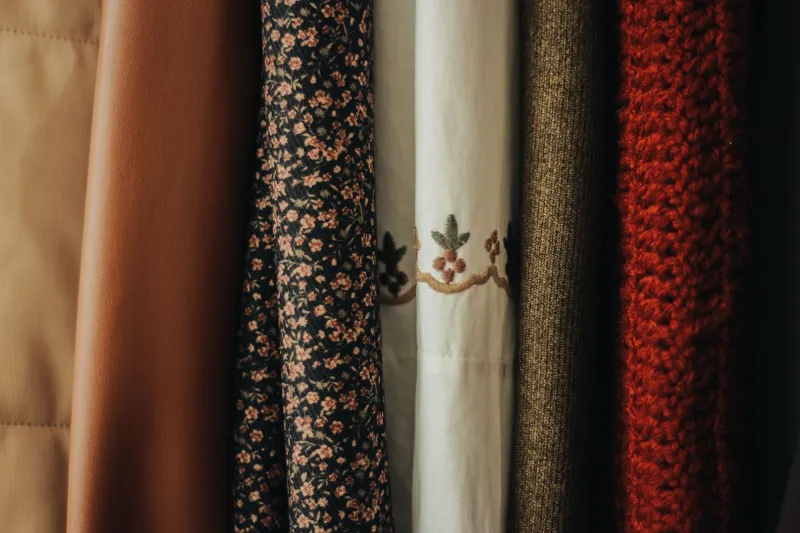
The Handover Hour: Entrusting Suede to a British Cloakroom

Photo by Photo by James Coleman on Unsplash on Unsplash
There are few moments in a well-dressed evening more vulnerable than the handover. One relinquishes a suede coat to a stranger behind a counter, receives a small ticket in return and walks into the warm. The transaction takes seconds; the consequences, if the rail is crowded or the night is wet, can linger for weeks. Suede is not fragile, but it is impressionable, and a British cloakroom in November is an environment of close hangers, warm air and haste. What follows is a calm protocol for theatre nights and restaurant coat checks, written for the wearer who would rather prevent a mark than explain one.
The Pause Before the Counter
Most cloakroom damage begins at home, in the pockets. Keys, coins, a folded receipt and a heavy phone all press their shape into the lining and, in time, into the nap. Empty the pockets before leaving, close the buttons or zip, and remove any scarf that would otherwise be crushed between collar and rail. A silk scarf is better carried than checked.
Consider the forecast with some honesty. A suede coat worn through a steady November drizzle will arrive at the counter already damp at the shoulders. In that condition it should not be handed into a warm, still cloakroom, where moisture and close hanging are precisely the conditions that flatten a soft nap and leave a faint, unhelpful smell. Ask instead for a cool, airy spot, or keep the coat with you, folded loosely over the arm. If the evening is likely to be wet throughout, a different outer layer may be the more considered choice; suede rewards those who choose their weather.
Presenting the Coat
Offer the coat on its hanger rather than bunched over the forearm. Collar upright, sleeves lightly crossed at the front, the coat closed enough to keep its shape. A broad, shaped hanger is preferable to a thin wire one; if the venue supplies wire, ask politely whether a wooden or padded hanger is available. Many good cloakrooms keep a small supply for exactly this reason, and the request is rarely refused.
Do not fold a suede coat along a sharp crease simply to save space on the rail. If folding is unavoidable, fold once along the back panel, nap inward, and never along the sleeve, where a line will sit longest. At restaurants, where the coat check may be a stand rather than a rail, ask that the coat be hung rather than draped over a chair back. A chair back is the quiet enemy of a good shoulder.
Reading the Rail
A crowded rail is a matter of compression. Coats pressed against one another for two hours will show a flattened patch at the sleeve or side, particularly in velvet-soft suede. Where possible, ask for a place at the end of the rail, or for the quieter of two rails if the venue has them. This is not an unreasonable request; it is the sort of small courtesy that cloakroom staff understand.
The ticket itself deserves a moment's thought. A stapled or pinned tag at the collar can leave a permanent mark, and a tight elastic loop can indentation the nap. Ask for a looped tag, or for the ticket to be placed in an inside pocket if the system allows. Should a tag have to be attached, request the sleeve seam rather than the collar or the centre back.
When the Night Turns Wet
The greater risk on a wet evening is not the rain that falls on the walk from the Tube, but the rain still on the coat when it is handed over. A damp suede coat placed among dry coats on a warm rail will not dry evenly. Blot the surface with a clean cloth before approaching the counter, and let the coat breathe for a moment rather than folding it immediately. If the cloakroom is hot and airless, a short wait in a cooler corridor is no bad thing.
Umbrellas deserve a word of their own. A wet umbrella pressed against a suede sleeve will leave a dark patch that dries to a ring. Keep the two apart, and ask for the umbrella to be checked separately where that service exists.
The Small Inspection Afterwards
Collect the coat before the final rush, when the rail is still orderly and the staff are not overwhelmed. In the taxi queue or under the porch light, run a hand along the collar and shoulders. Look for a flattened patch, a ticket-tag indentation or a dark spot at the cuff. These are the marks that are easily corrected within the hour and stubbornly fixed by the morning.
At home, brush the nap gently in one direction with a suede brush, hang the coat on a broad hanger in a cool room and leave it for twenty-four hours before wearing it again. Do not place it near a radiator, and do not cover it while it is still holding the warmth of the venue. Any mark should be dealt with the next day, in daylight, with the restraint that suede always asks for.
Courtesy and the Quiet Tip
Cloakroom staff are custodians of an evening, and a little courtesy goes a long way. A clear request, a please and a small gratuity where the service warrants it will often secure the broader hanger and the quieter rail. The coat check is a service, not a surrender of responsibility; the wearer who treats it as such tends to receive the care they have implicitly asked for.
A good coat is not diminished by being handed over. It is only diminished by being handed over carelessly. With a little foresight, a calm handover and a brief inspection afterwards, the ticket in the pocket becomes a minor token of a well-managed evening rather than a reminder of one.