The Suede Triage: A 2026 Ledger for Repair, Restoration or Retirement

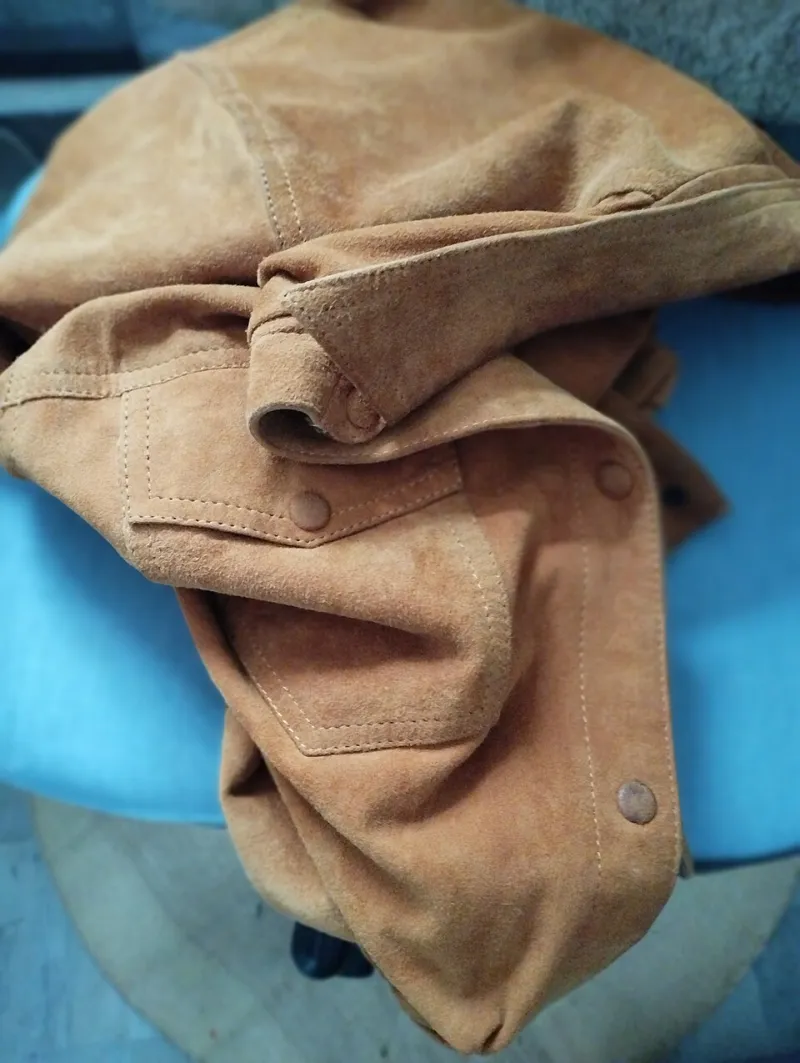
Photo: suede jacket repair assessment on salon workbench close-up, via roomblr.com
Suede is a generous material, but it is not infinitely forgiving. A jacket that has softened at the elbows, a bag that has taken the shape of its owner and a pair of boots that have seen several British winters can all remain eminently wearable, provided the damage is read correctly. The difficulty is that sentiment and replacement pricing tend to distort the judgement. The following decision tree is designed to replace that uncertainty with a calm, salon-grade assessment for 2026.
At Suede Salon, the first distinction we make is between cosmetic fatigue and structural failure. Cosmetic fatigue concerns the surface: nap, colour, light marks and the general bloom of the suede. Structural failure concerns the things that hold the piece together: seams, lining, leather board, zip tape and reinforcement. The first is usually a restoration question. The second is often a retirement question.
First Question: Is the Piece Structurally Sound?
Before any cleaning or colour work is considered, the piece should be assessed under good light and, ideally, inside and out. Check the seams at stress points: the armholes and elbow of a jacket, the handle mounts of a bag, the heel counter and flex point of a boot. A small area of worn stitching can be stabilised. A seam that has opened across a load-bearing area, or several seams that are failing at once, suggests that the piece is tired beyond cosmetic repair. The same applies to a bag whose handle mounts have torn through the suede, or a boot whose heel counter has collapsed.
The lining matters as much as the exterior. A shredded lining can be replaced, but the cost must be weighed against the value of the piece. Cracked leather board inside a bag, a zip that has torn away from the tape, or a jacket whose shoulder reinforcement has perished are all structural warnings. If the answer to the first question is no, the decision tree usually ends at retirement, however fond the attachment.
The Damage Ledger: Four Common Presentations
Bald nap
Bald patches occur where friction has flattened or removed the surface fibres, most often at elbows, cuffs, seat and bag corners. Light baldness can sometimes be re-napped and toned by a salon. Deep baldness, where the base leather is visible, is a different matter. It can be cosmetically improved, but it will not be invisible. The decision should rest on location and extent: a small patch under a cuff is manageable; a large area across the front of a jacket is a more serious compromise.
Stretched seams
Stretched or puckered seams are common in unlined suede jackets and in bags that have been overfilled. Sometimes the seam can be pressed and stabilised; sometimes the lining must be opened and the seam reinforced from behind. This is skilled work, and it is rarely inexpensive. If the stretching is accompanied by thinning of the suede along the seam line, the piece may be approaching the end of its wearable life.
Oil stains
Oil and grease marks are among the most misunderstood suede stains. They often spread before they are treated, and household remedies can set them further. A salon can use solvent gels and controlled drying to draw the oil out, but the success rate depends on the age of the stain and the nature of the oil. Fresh marks are easier than old ones. A single oil mark on a boot is usually worth treating; multiple oil marks across a light-coloured jacket may not justify the cost.
Water rings
Water rings arise when the suede has been wetted unevenly and dried without proper agitation of the nap. They can often be reduced by a full wet clean and re-napping, but the risk of colour movement must be assessed first. Pale suedes are less forgiving than dark ones. A water ring on a dark brown boot is a routine salon task; a water ring on a pale grey jacket requires a measured conversation about expectations.
The 2026 Cost Frame
The following figures are indicative for the UK in 2026 and will vary by region, by salon and by the complexity of the piece. They are intended as a comparison frame, not a quotation.
| Item | Typical salon restoration | Replacement benchmark | Decision signal |
|---|---|---|---|
| Suede jacket | £90 to £180 | £250 to £600 | Restore if structural assessment is positive and cost is below roughly half the replacement value |
| Suede bag | £65 to £140 | £200 to £500 | Restore if hardware and mounts are sound; retire if the handle mounts have torn |
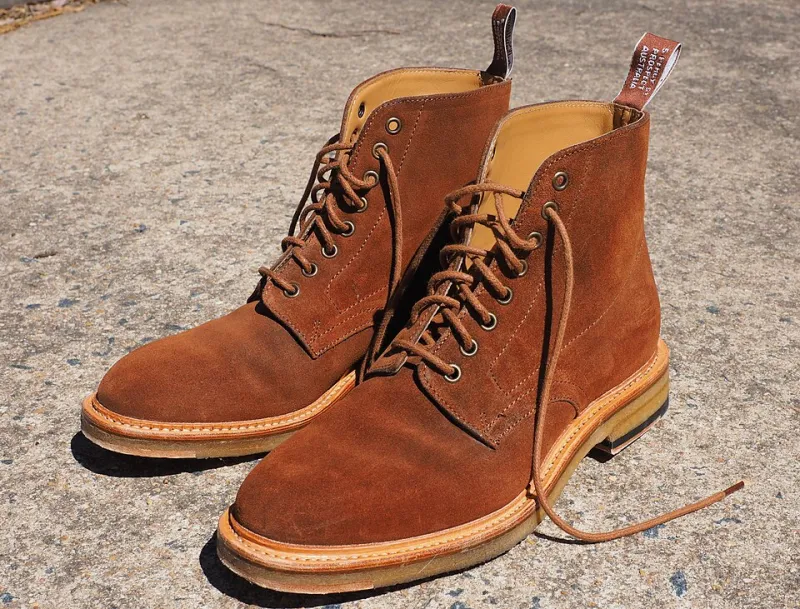
| Suede boots | £50 to £95 | £180 to £350 | Restore if the sole and heel are sound; retire if the heel counter has collapsed |
These are broad ranges. A full lining replacement, a complex colour match or a reconstruction of a torn handle mount will sit above them. The useful question is not whether the restoration is cheap in isolation, but whether it is proportionate to the piece. A £120 restoration on a £450 jacket that fits beautifully and has years of wear left is usually a sensible investment. The same £120 on a £150 jacket with multiple structural faults is not.
The Decision Tree in Practice
- Assess structure first. If the seams, lining, mounts or heel counters are failing across load-bearing areas, retirement is the default.
- Classify the damage. Cosmetic surface issues point towards restoration. Localised structural issues point towards repair. Widespread structural issues point towards retirement.
- Compare proportionate cost. Obtain a salon assessment and compare the likely restoration cost with the replacement benchmark, not with the original purchase price.
- Consider fit and frequency. A piece that fits well and is worn often earns restoration more easily than an occasional piece with a sentimental hold.
- Consider the sustainability case. Extending the life of a well-made suede piece avoids the environmental cost of replacement, but it does not justify spending heavily on an item that will fail again within a season.
When to Retire with Grace
Retirement is not a failure. A suede jacket with perished reinforcement, a bag with torn handle mounts or boots with a collapsed heel counter have reached the end of their serviceable life. They should not be passed to charity shops as wearable goods if they are not wearable. Textile recovery, repurposing or responsible disposal are more honest options. Where the piece is still sound but simply no longer wanted, resale or donation is appropriate, provided the flaws are described clearly.
The Salon Verdict
The most reliable way to decide is to book a professional assessment before committing to either restoration or replacement. At Suede Salon, we would rather give a candid verdict than promise a miracle. In 2026, with replacement costs rising and well-made suede becoming harder to find, the sensible default is to save what can be saved, repair what is localised and retire what is structurally exhausted. The decision tree is not a licence to restore everything. It is a framework for spending well.